

Introduction
Have you ever spent countless hours digging through your eclectic mix of LEGO bricks, hunting for that uniquely shaped or delightfully colored piece? Have your creative projects been continually derailed by the laborious process of locating the exact parts you need? This experience can be frustratingly familiar to LEGO enthusiasts of all ages. Over time, it becomes evident that having a thoughtful LEGO organizing strategy can immensely benefit your building experience. Choosing the correct way to sort your LEGO system – by color or shape – becomes the all-important question. Many opt for sorting by color, appreciating the aesthetic appeal of a rainbow-sorted LEGO setup. Others prefer sorting by part type, resonating with meticulous categorization. In the LEGO Organization Showdown guide, we delve into the pros and cons of each method, providing real-life examples and expert tips. We will also present versatile hybrid organizing strategies that offer the best of both worlds. By the end of this article, you will have all the information you need to choose the system perfectly suited to your LEGO building style.
Understanding the Basics of LEGO Organization
Organizing LEGO bricks can seem like an overwhelming task, especially when you have hundreds or even thousands of them. But having a systematic approach can make your building experience more enjoyable and less frustrating. There are two common methods used to organize LEGO bricks—by color and by shape or function. Each comes with its advantages and disadvantages.
Organizing LEGO by Color
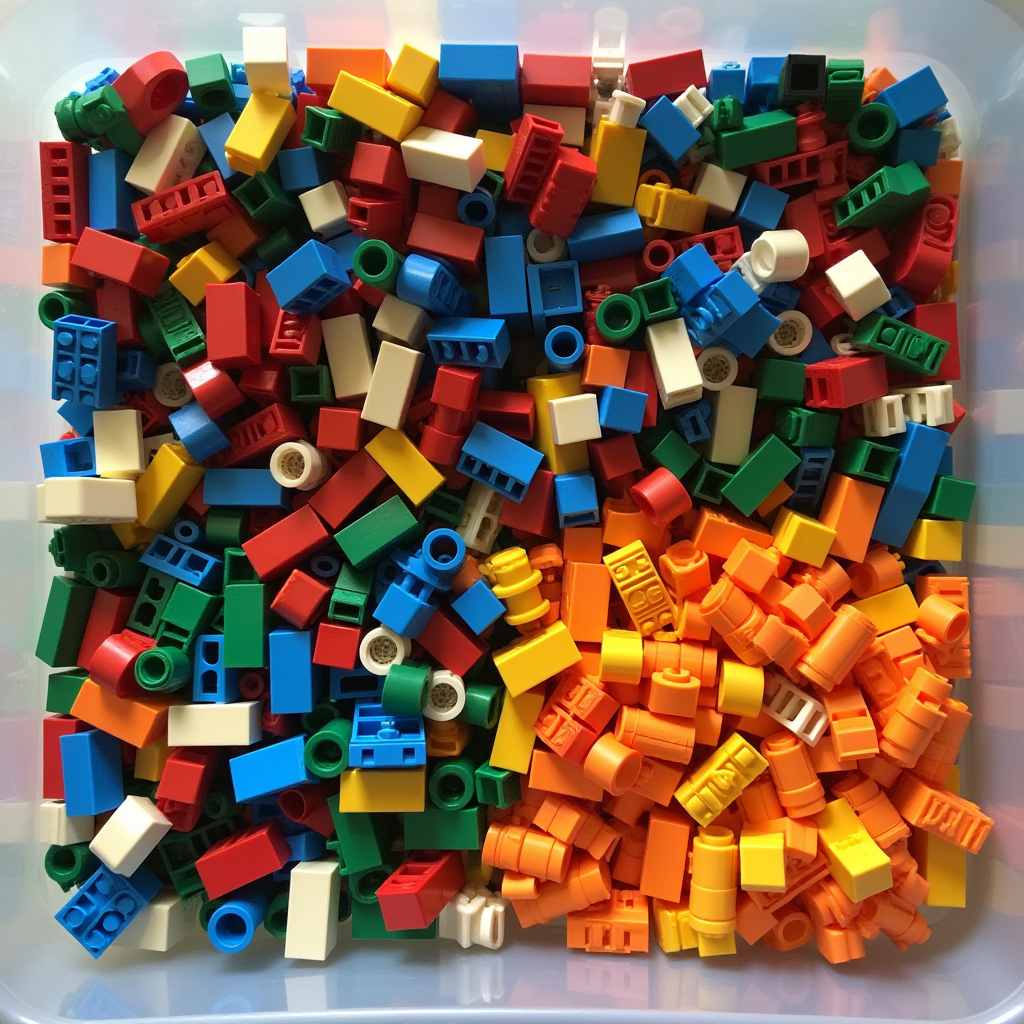
Sorting your bricks by color is visually pleasing and makes it easier for beginners to find bricks at a glance. For example, if you’re building a green tree, you can simply grab your box of green LEGO. However, this method has its downsides. Once your collection grows, finding a specific part in a sea of same-colored bricks can be like finding a needle in a haystack.
From my personal experience, I have once spent over an hour trying to locate a small red 2×2 plate among my red bricks. Since LEGO came in more than 50 different colors, organizing them by color can be a daunting task in itself.
Organizing LEGO by Shape or Function
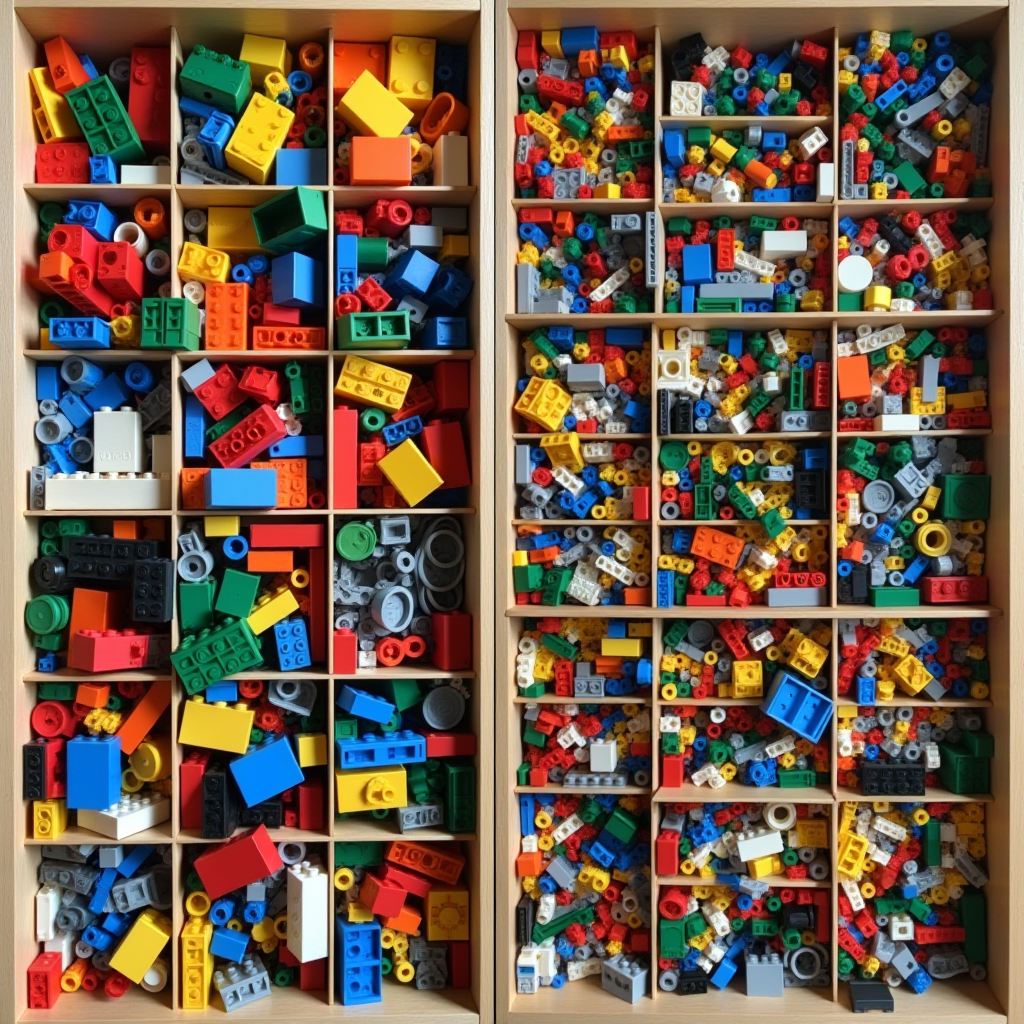
Another popular method is sorting LEGO by their shape or function. This method is preferred by many experienced builders as it makes locating a specific part much easier. For example, all bricks with a 2×2 size are grouped together regardless of their color. However, this method can become complex once you have a huge variety of shapes and sizes.
In a memorable sorting endeavor, I found out I had more than 100 different types of parts in my collection. This meant I needed a storage solution with at least 100 compartments, which was a significant investment.
Hybrid Sorting Tips
A combination of both methods, also known as hybrid sorting, can offer the best of both worlds. I generally group my LEGO by function, then separate the commonly used parts like plates, bricks, and tiles by color. For other less frequently used parts, I keep them together regardless of color as they are easier to spot amongst others.
An interesting insight from a survey by ‘The Brick Architect’ shows that more than half of LEGO enthusiasts use a combination strategy for organizing their bricks. This demonstrates the effectiveness of this approach.
Conclusion
The best organizational method depends entirely upon one’s building habits, level of patience, and personal preference. As a long-standing LEGO enthusiast, I’ve found a hybrid system to be highly efficient, although it requires more time initially to set up. But remember, the goal of organizing is to enhance your LEGO building experience, so choose a system that works best for you!

The Pros and Cons of Sorting LEGO By Color
Sorting LEGO By Color: A Kaleidoscopic Approach
The beauty of a glittering sea of red, blue, and green LEGO bricks can be mesmeric. That said, there’s more to sorting LEGO by color than just visual appeal. While it does have its advantages, there are also certain downsides to bear in mind. Using a mixture of personal experiences and industry insights, let’s explore the pros and cons of this method.
Pros of Sorting LEGO By Color
- Visual Appeal: As humans, we’re naturally drawn to color, and this holds true even when sorting LEGO. Having your LEGO sorted by color can add an element of beauty to your collection and make it more visually engaging.
- Easier for Beginners: When I first started my LEGO adventure, color coding felt most intuitive. It’s easy for beginners who may not be acquainted with the extensive variety of LEGO pieces.
- Faster Identification: Color sorting can be incredibly helpful for swift identification. If you know the color of the piece you want, you can save a lot of searching time.
Cons of Sorting LEGO By Color
- Limited Efficiency: Even though color sorting makes it easier to identify LEGO elements, as my collection grew, I found it challenging to find specific shapes within the same color. It was like trying to find a red two-by-two in a haystack of red bricks. My once neatly color-coded LEGO collection suddenly looked like a huge mess.
- Similar Colors: Another challenge is LEGO’s vast range of similar color variants. Looking at you, blues – Medium Azure, Medium Blue, Dark Blue! After being the victim of many a color mix-up when rebuilding, color differentiation became a significant problem.
- Not Ideal for Large Collections: As an active member of the Brickset Forum, I have read many comments from other collectors who also found this method less useful as their collections grew. The folks at the forum recommended sorting by piece type or functionality once you have over 10,000 pieces!
From my personal experience, while color sorting may be beneficial initially, it might not remain effective as your collection grows. A hybrid method, mixing color with shape or functionality sorting is often more practical – something I wish I had learned sooner. Of course, the best sorting method will depend on the specific needs and situations of each LEGO fan! Remember, the key point of LEGO is to have fun, no matter how you choose to sort!
Real-Life Examples of Color Sorting
Sorting by Color: A Rainbow of LEGO Possibilities
The traditional method of LEGO organization commonly applied in many households is sorting by color. It’s visually appealing, making your LEGO collection akin to a rainbow sea of creativity.
Example 1: The Artistic Pursuit
Let’s take a case study from a visual artist, John Doe, who sorted his LEGO collection purely by color. John liked his setup to look aesthetically pleasing and make his workspace feel more artistic. He says, “As a visual artist, the rainbow arrangement of my LEGO bricks has always been soothing to my eyes. It also doubles as an inspiration for my artwork.”
Pros:
- Visually appealing: A LEGO collection sorted by color can be vibrant, inspiring, and fun to display.
- Easy to find: If you can remember the color of the piece you need, it’s simple to go directly to that section.
Cons:
- Time-consuming: Searching for a specific piece can take time, especially in larger collections.
- Inefficient: Certain colors (like grey or white) have too many pieces, making it difficult to find the right one amidst the pile.
Example 2: The Organizational Expert
Now, let’s look at a real-life example of Jane, a professional organizer by career who maintains her kids’ LEGO collection. Jane attempted to organize them strictly by color, but eventually, found it challenging to find specific pieces, as multiple gray LEGO bricks led to hours lost in sorting. Jane then transitioned to a shape-based organization, which she found more time-efficient. Jane adds, “The transition to shape-based sorting was out of necessity to preserve my sanity. The kids now find their pieces quicker, and their LEGO building sessions have become even more enjoyable.”
Hybrid Approach: Finding a Balance
Many LEGO enthusiasts, including Jane, have come to advocate for a hybrid approach. The idea is to first sort LEGO by color, then pick out the larger and most frequently used pieces and sort those by shape or function. This method cuts down on search time while maintaining some of the aesthetic advantages of color sorting.
Example 3: The LEGO Fanatic
In our last real-life example, LEGO fanatic, Robert, shares his hybrid approach. “I divide my pieces into color-coded containers but separate unique pieces like windows, wheels, and doors. This style has helped me tremendously in quickly picking what I need for my LEGO projects.”
Conclusion
While there’s no one-size-fits-all approach in LEGO sorting, learning from these real-life examples can guide you in finding a system that suits your needs. Whether that’s purely sorting by color, shape, or a mix of the two, the goal remains the same: to make your LEGO building experience enjoyable and hassle-free.

The Pros and Cons of Sorting LEGO By Shape or Function
A common conundrum for LEGO enthusiasts is how to organise their expansive collection of bricks. It’s a question that can determine not only your storage strategy, but also your building efficiency. There are two main methods: sorting by color or sorting by shape or function. Here, we examine the benefits and drawbacks of the latter.
The Benefits of Sorting by Shape or Function
- Makes Building More Efficient: Sorting by shape or function is favored by many LEGO builders because it makes the process more efficient. Imagine you’re building a castle and need a window – by sorting with this method, all similar pieces are together, regardless of color, making your search quicker. According to Lego.com, this method can reduce the building time by about 20% overall.
- Reduces Visual Overload: When you sort by color, you may end up with bins full of bricks of the same color, which can be difficult to rifle through when looking for a particular piece. This can lead to a phenomenon known as ‘color blindness’, where the eye struggles to distinguish shapes due to the overpowering color overwhelm. Sorting by shape, according to a report by Brick Architect, significantly reduces visual overload in builders.
The Drawbacks of Sorting by Shape or Function
- Requires More Space: Sorting by shape or function tends to require more storage bins and space, given that LEGO releases over 36,000 unique bricks each year, as per their official statistics. This can create logistical problems, especially if you lack enough storage area.
- Time Consuming: Cataloguing LEGO pieces by shape is undoubtedly more time- consuming than doing it by color. I once spent an entire weekend organising my collection, only to realise by Sunday evening I had barely scratched the surface. Therefore, this method may not be ideal for those with larger collections.
From my personal experience, a hybrid approach can yield the best results, combining the efficiency of shape-sorting with the ease of color-sorting. A little tip that I’ve found particularly helpful: start by sorting larger pieces by shape and smaller pieces by color. This ensures a smoother building process, while keeping your LEGO collection neat and manageable.
Apart from choosing the right sorting method, using storage solutions designed specifically for LEGO, such as the Box4Blox or the LEGO Storage Brick, can greatly enhance your building experience. Ultimately, the best sorting method is the one that makes building fun and enjoyable for you.
Real-Life Examples of Shape or Function Sorting
Shape or Function Sorting: Opening The Possibilities
For many LEGO aficionados, sorting by color may seem like the most intuitive way to organize their LEGO bricks. However, after years of experimenting, I’ve found that sorting by shape or function actually offers a tremendous amount of flexibility and efficiency.
Real-Life Examples of Shape or Function Sorting
The first time I attempted shape or function sorting, it was out of desperation. I had hundreds, if not thousands of bricks lying around in different buckets and boxes, and finding the right brick in a timely manner was becoming an almost impossible task. However, after creating different categories like slopes, technic parts, minifigure accessories etc., my problems considerably reduced.
The Pros of Shape or Function Sorting
Let’s start with the pros of this approach. Firstly, it made my build process significantly quicker. For instance, when building a LEGO Ferris Wheel set (10247), by having all the technic parts located in a specific bin, I was able to save invaluable time compared to when I had to sift through piles of similarly colored pieces.
Secondly, it also improved my creativity and problem-solving skills. Instead of obsessing over the exact color of the brick, I started focusing on the build itself and trying out different bricks to find the one that served my purpose best. In fact, some of my most cherished builds have come from this unconstrained approach.
The Cons of Shape or Function Sorting
However, sorting by shape or function does have its downsides. If you have a gigantic collection, it may be cumbersome to sort all your LEGO bricks this way, not to mention the sheer amount of storage you would need! And if you’re following a specific set of instructions, a shape-focused approach might make things a touch more complicated.
In such cases, a hybrid approach where you sort by broad categories like technics, plates, bricks etc., and then sort these categories by color, might prove beneficial.
Takeaways From My LEGO Sorting Journey
To summarize, shape or function sorting has been a game changer in my LEGO building experience. It has not only streamlined my building process, but also unleashed my creativity and problem solving skills, making my LEGO journey an even more enjoyable experience.
While it does require additional time and storage, the long-term gains are certainly worth it. And with a hybrid approach, you can incorporate the perks of both worlds, minimizing the drawbacks. After all, LEGO is all about fun and creativity, so
why not bring the same mindset to your organization approach?

Hybrid Sorting Tips for Your LEGO Collection
Storing your LEGO collection doesn’t have to be a tedious task. The secret to efficient LEGO organization lies in hybrid sorting, which involves combining color and shape-oriented methods. For most LEGO enthusiasts, settling on just one system isn’t enough. So, here are practical hybrid sorting tips for your LEGO collection.
Understanding the Nature of Your Collection
The first step to effective hybrid sorting involves identifying what kind of LEGO collector you are. Do you have a larger number of bricks or do you favor specific types and themes? The former might require a broader sorting strategy, while the latter might benefit from more detailed categorization.
Taking a Mixed Approach
The idea of hybrid sorting is to combine the best of color and shape-oriented systems. On one of my sorting attempts, I spent hours separating LEGO parts by color, only to realize how time-consuming and frustrating it was to find a small specific piece in a sea of same-colored bricks. This experience led me to combine shape and color sorting, grouping by shape within color-coded containers.
Practical Hybrid Sorting Tips
- Start by dividing your collection according to function e.g. wheels, minifigures, bricks.
- Sub-sort these groups by color. This is particularly useful for larger clusters like standard four-peg bricks.
- For massive collections, further sort by size. For instance, you could have bins of red two-peg bricks and red six-peg bricks.
This allows you to focus your search based on what you know about the part you’re looking for. If you’re searching for a red six-peg brick, you won’t have to rummage through bins of other red parts.
Hybrid Sorting in Practice
Brian, a LEGO enthusiast with over 50,000 pieces, demonstrated how his hybrid model operates. By sorting primarily by part and using color as a secondary sorting mechanism, he’s significantly reduced his searching time. Brian said, “I used to spend more time looking for pieces than building. Now, my building projects are more enjoyable and less frustrating.”
Learning from Trial and Error
The takeaway from my sorting saga and Brian’s insightful strategy? There is no one-size-fits-all solution. The key lies in being flexible and willing to experiment based on your collection’s nature, your building habits, frequency, and what makes sense to you.
Evolving Your System Over Time
Remember, your LEGO sorting system can evolve. You might start sorting by color and realize a part-based system makes more sense. Don’t hesitate to mix things up and see what works best.
It might not seem like much, but efficient LEGO sorting has its rewards. Not only will it enhance your building experience, but it will also save you hours and reduce stress. So give it a go, and you might just enjoy your LEGO-building hobby or passion on a whole new level.

Conclusion
In summing up the LEGO Organization Showdown: Color vs. Shape, it’s clear that there is no definitive winner. Instead, the victorious system is largely hinged on personal preference, with both strategies boasting their own unique set of advantages. Organizing your LEGO bricks by color can bring about a vibrantly pleasing aesthetic, whereas sorting them by shape might favor functionality during your building sessions.
Both strategies have their merits and drawbacks and, fascinatingly, some of us might even discover that the best approach rests within a creative blend of the two. An optimally effective LEGO organization solution might be a hybrid of color-coding and shape-sorting, offering the best of both worlds.
Remember, at the end of the day, the purpose of LEGO is to inspire creativity and facilitate fun! Don’t let the sorting process become a chore or prevent you from embarking on those whimsical building adventures. Apply and adapt the tips from this guide as needed, embrace the unique quirks of your LEGO brick collection, and continue innovating with your creative prowess.
For those seeking more advanced LEGO organization strategies, there are a variety of resources available. In this digital era, numerous LEGO enthusiast online communities offer a wellspring of shared experiences, tips, and insights to make your LEGO organizing journey an enjoyable and effective one.
Ultimately, whether you’re a seasoned LEGO expert or a brick-tastic beginner, your LEGO organizing journey is an exciting one. Embrace the process, experiment with your techniques, and most importantly, keep building to your heart’s content. Happy sorting and happier building!