

Introduction
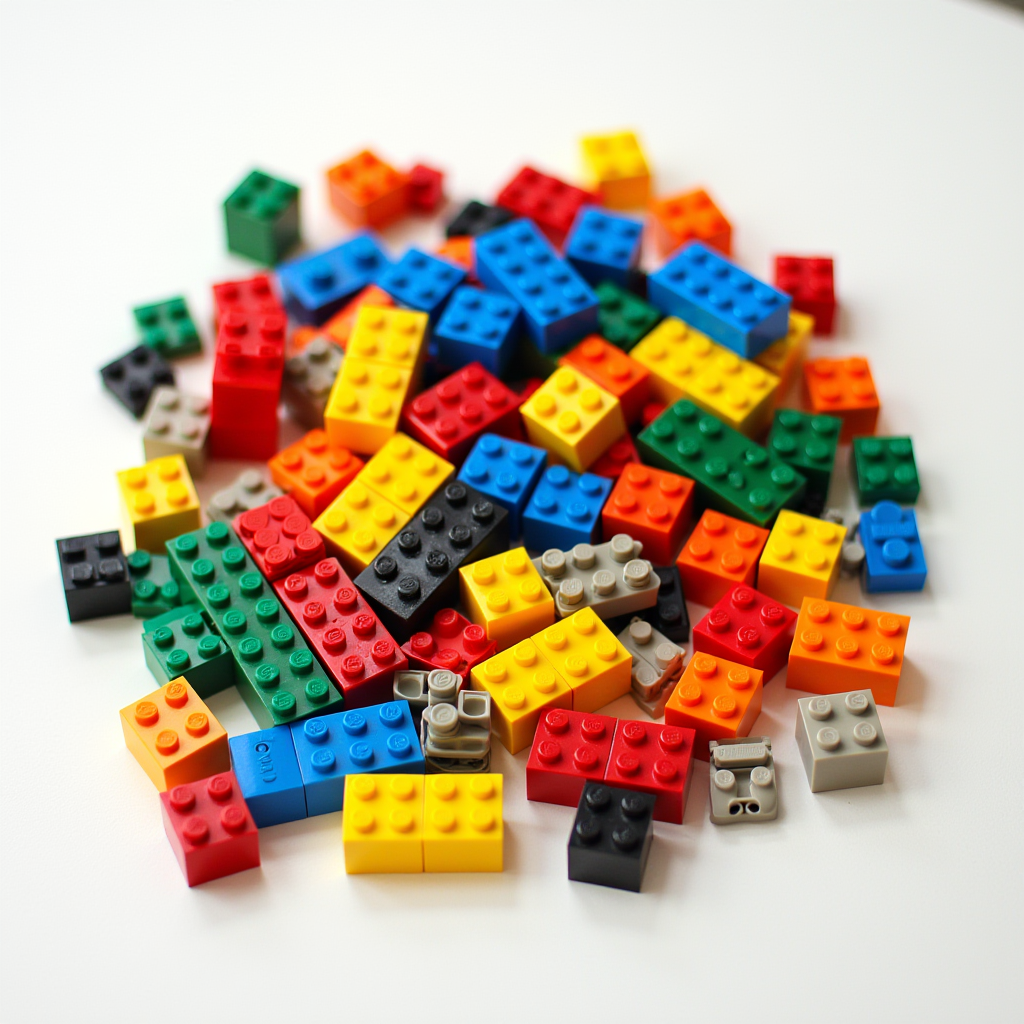
If you are a LEGO enthusiast, you probably know the struggle too well: finding that specific brick to complete your masterpiece can be as hard as finding a needle in a haystack. You delve into your extensive LEGO collection, only to find chaos: bricks of all shapes, sizes, and colors mixed together without any order. The hours that should have been spent indulging in your hobby are instead wasted on the grueling task of sorting through piles of bricks. This disorder not only hinders your progress but also dampens that creative spark. Wouldn’t it be amazing if you could just reach right in and pick out that elusive piece instantly? Fret not, because our ‘Master the Brick: Ultimate Guide to Organizing and Labeling Your LEGO Collection’ promises to deliver a practical solution. This guide will introduce you to a consistent labeling system for bins, drawers, or tackle boxes that will transform your chaotic LEGOs collection into a tidy, easily navigable haven. With our insights on labeling tools, printable labels, and digital trackers, you’re about to turn your LEGO chaos into LEGO paradise.
Understanding your Lego Collection
Beginning Your Lego Collection
Part of the joy in collecting Lego is the process, not just of building but also organizing, and there’s no question that being able to locate bricks and sets quickly enhances the experience. Don’t be daunted if you’re just beginning, or if, like me, your passion has already unearthed a room full of random, colorful bricks.
The Importance of a Systematic Approach
From experience, I know that a systematically organized collection can save hours, and even days, of fruitless searching. When I was first started out, my disorganized Lego collection was a common cause of project delays and, at times, sheer frustration. That’s why I appreciate the importance of a helpful numbering and labeling system. Numerically categorizing parts can help you track pieces and ensure that every brick has a home.
Trusty Labeling Tools
It sounds simple, but a good handheld label printer is your best friend. I swear by the Brother P-Touch PT-D210. The clear, legible print and different tape color options make it an essential tool in my Lego collection tracking system.
The Power of Printable Labels
Printable labels are an inexpensive and customizable option. My favorite are the Avery 8160 labels which are easy to format using Avery’s online design and print tool. The labels work with both inkjet and laser printers, and are small enough to fit onto almost any storage container.
Digital Trackers: The Modern Organizer’s Tool
Going digital with Rebrickable or Brickset has saved my sanity. These websites digitally catalog your collection, maintaining records of sets and individual pieces. It took some dedication to initially log my collection, but the payoff has been tremendous. Rebrickable even shows you other possible creations you can make using sets you own.
Storage Matters: Bins, Drawers, and Tackle Boxes
Your choice of storage is crucial. I have found Sterilite’s plastic drawers to be sturdy and transparent, making my collection visually accessible. In each drawer, I use Plano tackle boxes to categorize smaller parts. The adjustable compartments are a godsend when it comes to sorting out those tricky small pieces.
Take It From Me: Learn From My Mistakes
In conclusion, no matter where you’re at in your Lego collecting journey, organization is paramount. I speak from painful, personal experience when I say that you don’t want to spend precious building time hunting down that elusive piece. After all, the main purpose of a Lego collection is to enjoy it. So, invest in a little time and effort upfront for an orderly organization. The reward is a stress-free, enjoyable Lego building experience.
Labeling Tools: A Comprehensive Review
Labeling your LEGO collection can be a relatively baffling task, especially when you have boxes and containers brimming with those colorful bricks. Thankfully, technology and traditional methods provide us with some practical, user-friendly labeling tools to help us achieve some organization.
Printable Labels
One of the most straightforward tools at our disposal are printable labels. These can be printed at home using label sheets and a standard printer. Sites like Online Labels even offer label design software, allowing you to customize the labels using fonts, colors, and icons of your choice.
During an overhaul of my own LEGO collection, I had the unfortunate experience of using a cheaper label brand that neither stuck correctly nor lasted long. The lesson learned was not to skimp on the quality when it comes to printable labels. Good quality labels such as those from Avery are durable, easier to remove and replace, and won’t leave a sticky residue.
Digital Trackers
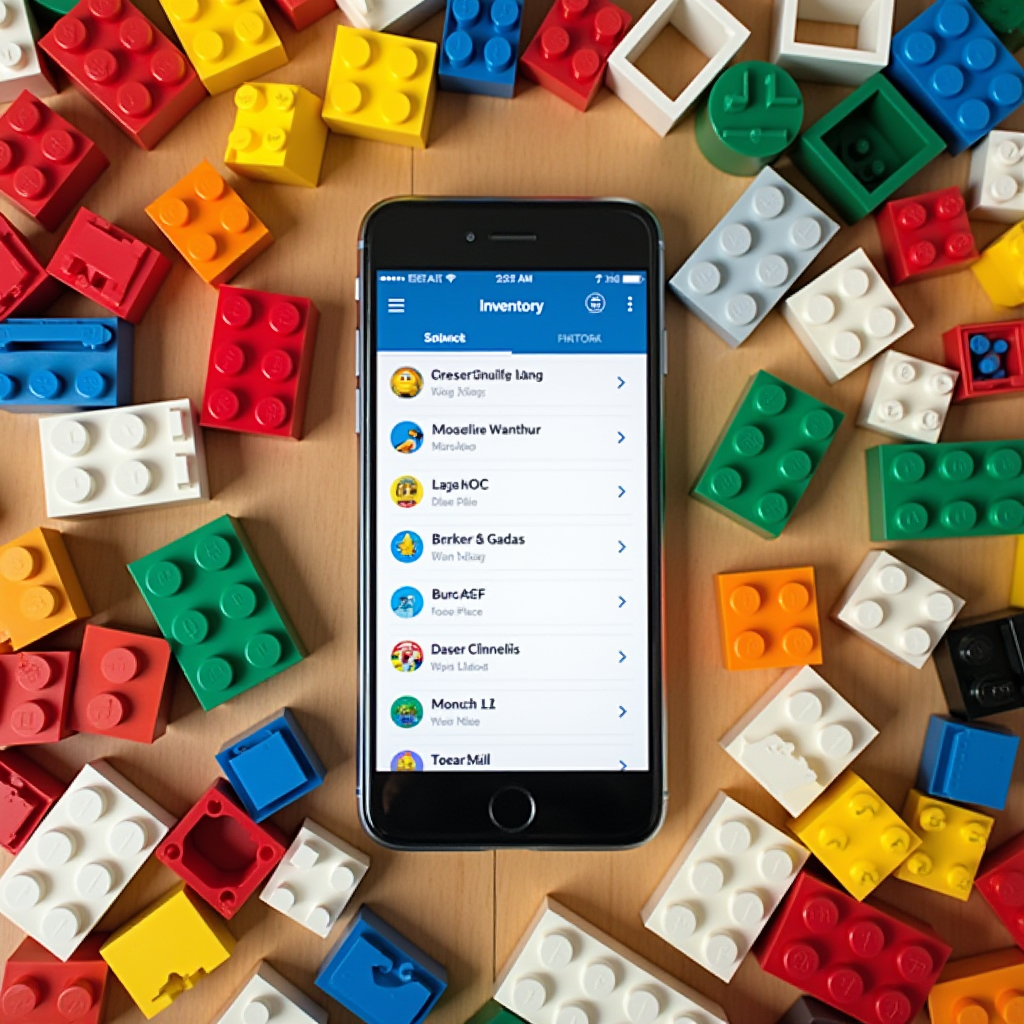
In today’s tech-savvy environment, digital trackers and applications can be incredibly effective tools. Apps like Brickset allow you to log your entire LEGO collection details, and they even link to the respective online construction guides.
On a personal front, using these digital tools provided an insight that I had underutilized space in my storage system. With careful tracking, I managed to reorganize my LEGO parts more efficiently, effectively freeing up some much-needed space.
Labeling Machines
Labeling machines could seem like an overkill for organizing LEGO, but trust me, these are game-changers. They are especially useful when dealing with larger collections. I use a Brother P-Touch D210, which is easy to use and offers various font and design options.
An interesting insight I gained was how much time I saved by using this device. A study published in The Economist noted that an average LEGO collector could waste up to 1.8 days per year simply trying to locate specific bricks. Labeling reduces this bricks-hunting time significantly, ensuring more time for creative building instead.
Concluding Thoughts
Choosing a method depends heavily on your unique needs, budget, and the size of your LEGO collection. Printable labels serve you well if you’re seeking a cost-effective method, while digital trackers are excellent for tracking and analyzing your collection. Labeling machines provide a professional edge, especially for vast collections. Ultimately, a mix of these tools might be the ideal solution, offering both physical categorization and digital analysis.
Remember, the utmost goal is a well-organized collection, saving time, enhancing your building experience, and most importantly, making it all fun. That is, after all, what LEGO is all about.

Using Printable Labels for your Lego Collection
Using printable labels for your Lego collection is an incredibly effective way to keep your builds organized, easily accessible and helps in quicker building whenever you need specific LEGO pieces. Printable labels not only neatly categorize your LEGO bricks but also lend a professional touch to your collection, especially if you plan to showcase them. Here’s how you can get started.
Choosing the Right Printable Labels
Choosing the right kind of printable labels can make a significant difference in the efficiency of your LEGO organizing system. I learnt this the hard way when I initially decided to go with the cheapest options available. The labels were too small and the ink quickly faded, rendering them useless within a few months. Lesson learnt, I switched to sturdy, high-quality labels.
When you consider labels, you’ll want something that will stick well, yet it should be removable without leaving residues. Also, look for labels that are compatible with your printer. Many printable labels designed for home use work well with typical inkjet or laser printers. From my experiences, clear printable labels work excellently as they blend well with any bin or drawer.
Creating Your Labeling System
Designing your labeling system is the most fun part. When I started with my collection, I classified my LEGOs based on color. But very soon I realized that a more efficient grouping system was needed. Now, I use broad categories like minifigures, bricks, plates, wheels, etc. These are then subcategorized according to size or color, depending on the volume under each.
For example:
- Bricks (1Xn, 2Xn, Specialty bricks)
- Plates (1Xn, 2Xn, Specialty plates)
Printing and applying your labels
Once you’ve organized your collection into categories, it’s time to print your labels. A good quality color printer goes a long way in creating vibrant, easily readable labels. When applying your labels, keep utility and visibility in mind. Stick the labels on the front or easy-to-view side of your bins.
Digital Tracking System
In addition to physically labeling your bins, you can also consider a digital tracking system for a more precise inventory control. I found the website Brickset extraordinarily handy. This tool allows you to categorize your bricks digitally for better inventory management and even offers additional information about each piece.
Be Consistently Informative
Include important information on your labels, for instance, the name of the element, color and the Design ID. Remember, the more information you add to your labels, the easier it becomes to manage your inventory, especially as your collection grows.
To conclude, using printable labels can significantly enhance your Lego collection’s organizational system. It takes a bit of trial and error to perfect, but once you’ve got it down, you’ll save loads of time in the future.
Remember that the aim is for you to enjoy your Lego building process. That’s what makes all this organizing worth it!

Digitally Tracking your Lego Collection
Understanding the intricacy and scope of a Lego collection is essential for every Lego enthusiast. Whether you are a serious Lego aficionado who has an extensive collection of kits, figures, and blocks, or an occasional hobbyist who likes to dabble, structuring and tracking your Lego pieces is a task that needs careful organization and scrutiny.
Digital Lego Tracking – The Why and The How
We live in an age of digital technology that has integrated itself into every aspect of our lives – even our hobbies. Digitally tracking your Lego collection can make a significant difference in how you manage and interact with your Lego sets. This approach offers a vast array of benefits; it can save time when searching for specific pieces, it can enable you to keep track of completed sets versus parts of sets, and it can even help you determine the market value of some of your rarer pieces.
There are several viable resources available that can assist you with digitally tracking your Lego collection. One of the best online tools is Brickset. Brickset is not just a database for Lego sets but also offers a platform to track and manage your Lego collection digitally. It has easy-to-use features for searching, sorting, and listing your Lego sets. Moreover, it can sync with other Lego databases, making it the perfect solution for serious Lego collectors.
My Personal Experience
As a Lego enthusiast myself, I have personally found that digitally tracking my collection has revolutionized the way I interact with my hobby. It used to take significant time to locate a particular piece, especially when I was mid-build. After implementing digital tracking, the process has become considerably more efficient, and I can spend the extra time doing what I love – building!
Labeling and Storing – An Essential Practice
The physical tracking of Lego pieces is just as vital as the digital aspect. Labeling helps us find the necessary parts quickly when we’re set for a building marathon. For this, I would recommend using dedicated labeling tools which are specifically designed for such tasks. My choice is the DYMO label maker for its versatility and durability of labels.
But remember, labeling your Lego pieces isn’t just about slapping a sticker and making a note in your digital tracker. It is about organizing. I learned this the hard way after my first mass labeling exercise turned out to be ineffective. I quickly discovered the importance of having a consistent labeling system for bins, drawers, or tackle boxes.
Conclusion
Successfully digitally tracking and physically organizing your Lego collection begins with understanding the need for a systematic approach. Once you have this clarity, you can watch as your Lego interaction shifts from a test of patience (sifting through piles of unsorted Lego parts can be mind-numbing!) to the enjoyable and fulfilling hobby that it is supposed to be.
Building a Consistent Labeling System
Building a consistent labeling system requires an understanding of your collection, planning, and the right tools. Here are the steps and insights gained from personal trial-and-error to foster an organized labeling system for your prized LEGO collection.
Understanding Your Collection
Firstly, know your collection. Understanding the size and variety of your LEGO sets allows you to plan your labeling system better. For instance, with over 36,000 bricks designed by LEGO (according to Bricklink), a substantial collection may benefit from a more detailed labeling system. Remember, a system that works for a few hundred parts may not work for thousands.
Choosing Your Storage
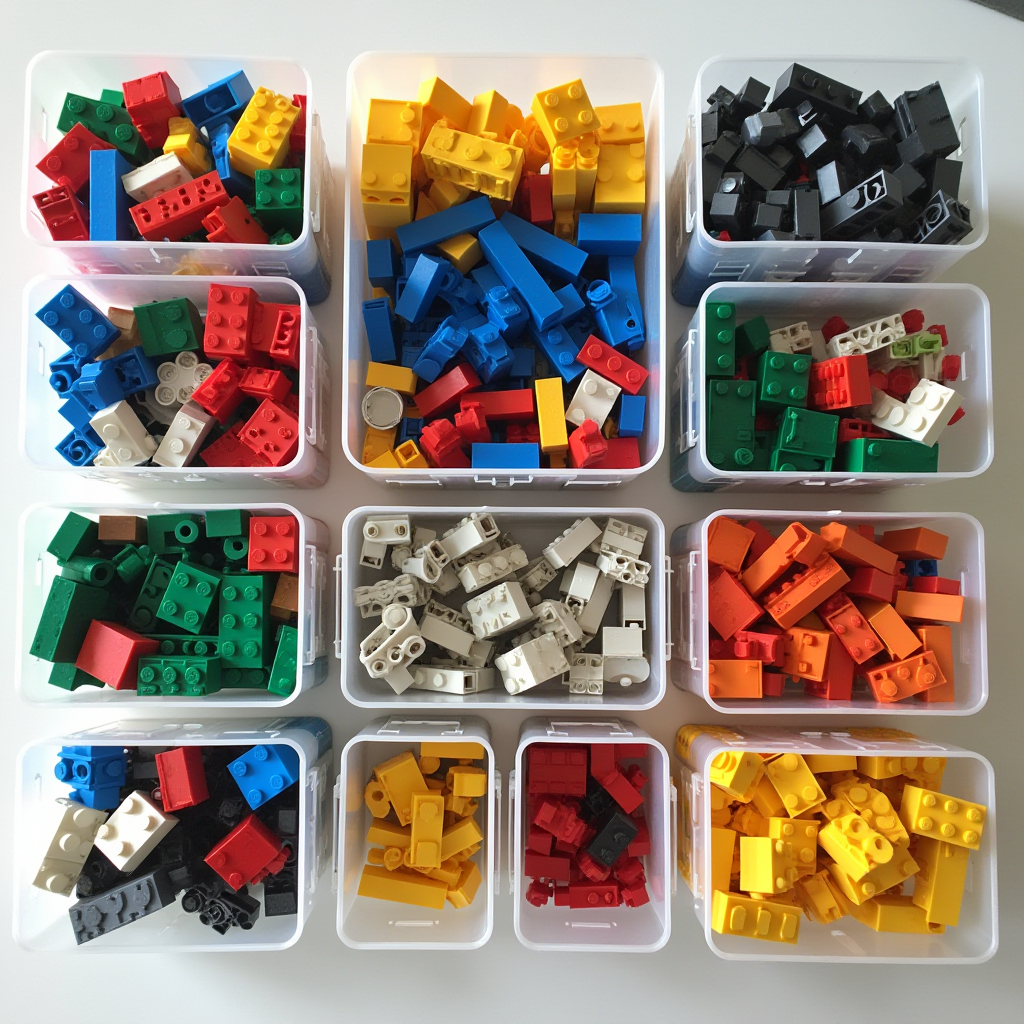
Once you have an understanding of your collection, the next step is choosing your storage. From personal experience, using clear bins and drawers can work wonders, allowing you to see your pieces, adding another layer of organization. If you’re a fishing enthusiast as well, repurposing tackle boxes provides small compartments perfect for LEGO parts.
Labeling: Tools of the Trade
Now, let’s talk about labels. Label printers play a crucial role in an organized labeling system. They offer easy-to-read labels that stick to almost any surface. A top pick in the hobbyist community is the Dymo LabelManager 160. Alternatively, printable labels are convenient for those who do not wish to invest in a label printer.
Creating the Labels
Remember, consistency is key. Define a system (i.e., by color, by function, by set, etc.) and stick to it. For example, when sorting by color, use corresponding color labels for a quick visual aid. Stick to one typeface and size, ensuring readability. Too many times, I’ve personally floundered with labels too small or written in a font that’s tricky to decipher.
Digitally Tracking Your Collection
For those with a more substantial collection, it may be helpful to track your pieces digitally. Sites like Brickset and Rebrickable allow users to input their sets and track which pieces they have. They even provide the ability to track lost pieces, easing the process of reordering or purchasing new parts.
Building a consistent labeling system has its share of trial and error. I’ve found myself, in the beginning, resorting to unlabeled boxes, only to spend hours hunting for a single part. The key is to create a system that works for you, one that makes the process of organizing and locating your pieces a pleasant experience rather than a daunting task.
Happy Building!

Maintenance and Updates: Keeping your Lego collection Organized
Maintaining and regularly updating your Lego collection might feel like a daunting task, especially if your collection has grown over the years. But with a few practical techniques and the right tools, you can keep your Lego sets organized, easy to find, and in great condition for your next build.
Creating a Consistent Labeling System
From personal experience, the first step towards organizing your collection is creating a consistent labeling system. Trust me, there’s nothing worse than searching for that one specific Lego piece in a pile of thousands. I started by separating my Lego bricks based on their size and color. I then placed them in separate clear plastic bins and labeled them.
For labeling, a simple permanent marker on masking tape is a good start. However, if you want a more durable and professional-looking solution, a label maker like this can be a game-changer.
Printable Labels and Labeling Tools
If you’re a fan of printable labels, which I have found particularly useful when your collection grows, there are plenty of free templates online. They come in different sizes and can be printed on sticker paper. For instance, resources like this one from Lego are a handy way to get started.
In the past, I had made the mistake of not regularly updating my labels. Over time, I’ve learned that it’s crucial to update them as soon as you add or remove pieces from your bins. Otherwise, you’ll end up with misplaced pieces.
Digital Trackers
Physical labels are essential, but for a more in-depth organization, a digital tracker is your best friend. Apps like Brickset or websites like Rebrickable allow you not just to catalog your sets, but also keep track of individual Lego parts. It might take some time to input your entire collection, but the result is worth it.
Even after organizing my entire Lego collection, I once spent days looking for a piece of a rare Lego set. I realized it was because I never updated my digital tracker. That’s why I encourage you to update your virtual Lego stock regularly, ideally right after each build or purchase.
In summary, an efficient Lego organization involves sorting pieces into categories, labeling bins or drawers clearly with durable labels, and tracking your collection digitally. This method has saved me countless hours, and I’m sure it will do the same for you. Happy building!
Conclusion
In conclusion, the art of tidying and organizing may seem like a daunting task, especially when you’re dealing with a sea of LEGO pieces. But if you break it down into simple steps, as detailed in our guide, you’ll find that it’s entirely possible, manageable, and can even be fun! Armed with the right tools and strategies, from labels to digital trackers, you are ready to embark on your LEGO organizing adventure.
Remember, take the time to enjoy the process as you make your way through your collection, and don’t let the task intimidate you. In organizing and labeling your LEGOs, you are not only creating a cleaner and easier-to-navigate collection, but you’re also deepening your connection with your hobby by truly understanding the scope of your collection and how each piece fits into the grander scheme of things.
It’s much like building a LEGO masterpiece, one brick at a time. Each piece, no matter how small or seemingly insignificant, matters. The same goes for your organizing efforts – each step, each label, each categorization, matters.
By applying the tips shared in this guide, you’ll soon master the brick. Your LEGO collection will no longer represent a chaotic array of pieces, but a well-catalogued treasure trove, where every part has its place.
And remember, there’s a wider community of LEGO enthusiasts out there who are more than willing to lend their tips and tricks to help you in your organizing endeavor.
So, dear LEGO collector, embrace the task, power up your label maker, print out those printable labels, fire up your digital trackers, and start making sense of your bricks! Here’s to a more organized, accessible, and joyful LEGO building experience. Happy organizing!